
You've chosen your bricks. Now there's one more decision that will change how they look on the wall: the colour of your mortar.
It's easy to treat mortar as an afterthought. But the same brick can look warm and traditional with one mortar and crisp and modern with another, and the wrong choice is hard to undo once it's set.
In this guide, we'll explain what affects mortar colour, which shades suit the most popular brick colours and how to match mortar on an existing wall. If you'd like a second opinion along the way, our Brick Advisors are happy to help.
Why does mortar colour matter so much?
Mortar takes up more of your wall than most people expect.
A standard UK brick face measures 215 x 65mm. Add the usual 10mm joints and each brick takes up 225 x 75mm of wall, which means mortar makes up around 17% of what you see.
That's roughly one sixth of the finished wall.
Because there's so much of it, mortar colour changes how your brickwork reads from the street. It can:
⦿ Shift the overall tone: a light mortar lifts the whole wall, while a dark one makes it look deeper and richer.
⦿ Show off or soften the pattern: contrasting joints outline every brick, while matched joints let the wall read as one surface.
⦿ Hide or highlight variation: a blended mortar calms down bricks with lots of colour variation, and a contrasting one draws attention to it.
⦿ Make old and new sit together: on an extension, the right mortar does a lot of the work in helping new brickwork blend in.
What decides the colour of mortar?
Mortar is a mix of sand, a binder (cement, lime or both) and water. Each ingredient plays a part in the final colour.
⦿ Sand: this has the biggest effect. Yellow building sand gives a warm buff tone, while paler or silver sands give a lighter, cooler finish.
⦿ Cement: standard Portland cement is grey and pulls the mix towards grey. White cement is used when you want a light or brightly coloured mortar.
⦿ Lime: lime gives a softer, lighter colour and is the traditional choice for older buildings.
⦿ Pigment: added to create shades like red, brown, charcoal or black. Always follow the manufacturer's dosage, as too much can weaken the mortar.
⦿ Drying and weather: fresh mortar looks darker while it's wet and lightens as it dries and cures, so the colour you see on day one isn't the colour you'll live with.
If you'd rather not mix your own, coloured ready-mixed and dry bagged mortars are widely available in a range of standard shades. They're a good way to keep the colour consistent across a big job.
Should your mortar blend in or stand out?
This is the first question to answer, because it narrows your choice straight away.
Blending in means picking a mortar close to the main colour of your bricks. The wall reads as one calm surface and small differences between bricks matter less. It's the safest choice for extensions, period homes and bricks with a lot of colour variation.
Standing out means picking a mortar that's noticeably lighter or darker than your bricks. Every brick is outlined, so the bond pattern and the shape of each brick become part of the design. It suits feature walls and contemporary builds, and works best with bricks that are consistent in size and colour.
As a rule of thumb:
⦿ Lighter mortar: makes brickwork look brighter and fresher, and makes the joints more visible.
⦿ Darker mortar: makes brickwork look richer and more solid, and lets the bricks take centre stage.
⦿ Matched mortar: keeps the focus on the wall as a whole rather than the individual bricks.
Not sure which way to go? Mortar that matches the lighter tones in your bricks is a safe middle ground for most homes.
Which mortar colour goes with your bricks?
There's no single right answer, but some pairings work reliably well. Here's where we'd start for the most popular brick colours.
Red bricks
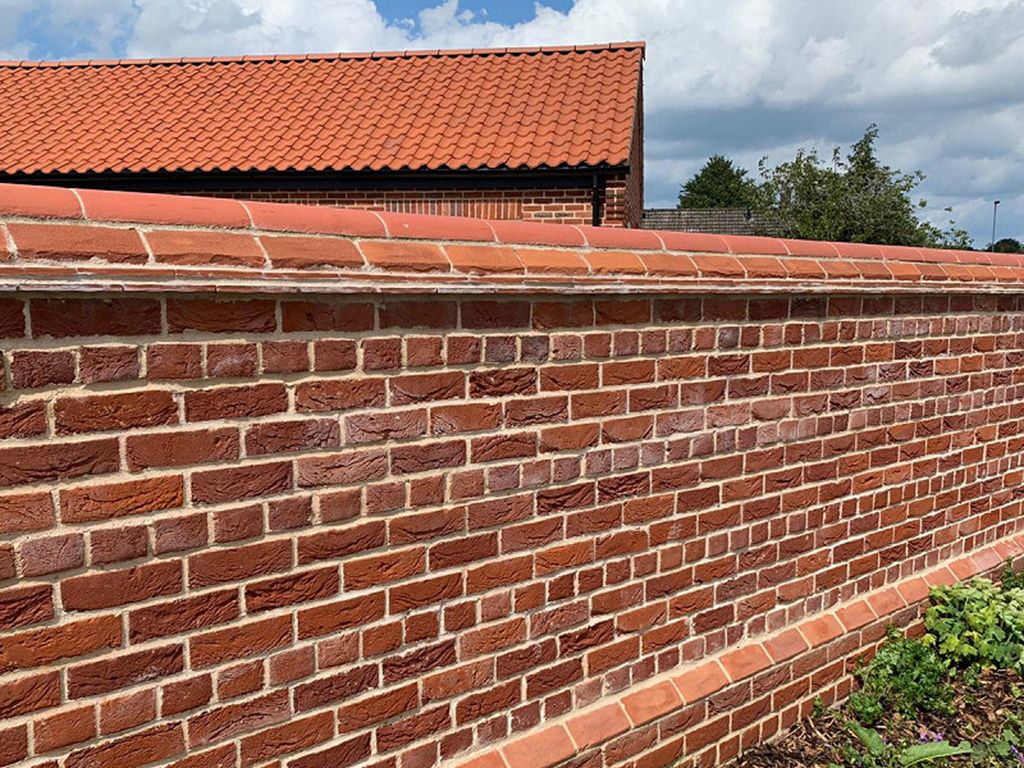
Red bricks are the most common sight on UK homes, so you've got plenty of options. Natural buff mortar gives a warm, traditional finish that suits Victorian and Edwardian houses. Light grey gives a cleaner, more modern look. For a bold contrast, a dark grey or charcoal mortar makes red brick look deeper and more striking.
Avoid very bright white mortar with red bricks unless you want a strong grid effect, as it can look harsh.
Buff and yellow bricks
Buff bricks and yellow bricks, including London stocks, look best with a mortar in the same family. A pale buff or natural mortar keeps things soft and authentic. A light grey can echo the grey and black flecks often found in stock bricks.
Very dark mortar tends to overpower lighter bricks, so use it with care.
Brown bricks
Brown bricks suit warm tones. A warm buff or light brown mortar keeps the wall feeling cohesive, while a mid-brown can make multi-toned brown bricks look richer. Cold, pure grey mortars can look flat against warm brown.
Grey, blue and black bricks
Grey bricks and blue bricks are often chosen for a contemporary look. A matching grey or charcoal mortar gives a sleek, almost monolithic finish. A light grey or white mortar creates a sharp, graphic contrast that shows off the bond.
White and cream bricks
White bricks and cream bricks look clean and bright with a white or pale mortar. A mid-grey mortar adds definition without being too stark, while a dark mortar gives a bold, modern grid.
Mortar colours at a glance
| Brick colour | Blended look | Contrasting look |
|---|---|---|
| Red | Natural buff, red-tinted | Light grey, charcoal |
| Buff and yellow | Pale buff, natural | Light grey |
| Brown | Warm buff, light brown | Mid-grey |
| Grey, blue and black | Grey, charcoal | Light grey, white |
| White and cream | White, pale cream | Mid-grey, charcoal |
How do you match mortar on an existing wall?
When you're building an extension, a garden wall or repointing, the goal changes. You're no longer choosing a colour you like. You're matching one that's already there.
Start by looking closely at the existing mortar:
⦿ Check the colour in daylight: look at it on a dry day, in both sun and shade, and compare it against the weathered joints rather than any freshly cleaned patches.
⦿ Look at the sand: scrape a little away and you'll often see the colour and size of the sand grains, which is the key to getting close.
⦿ Work out if it's lime or cement: lime mortar is usually softer, crumbles more easily and has a slightly warmer, chalkier look.
⦿ Note the joint finish: the shape of the joint changes how the colour reads (more on this below).
If your home is older, there's a good chance the original mortar is lime based. Historic England's guidance favours lime mortar when repointing traditional buildings, because hard cement mortar can trap moisture and damage softer bricks. If your property is listed or in a conservation area, check with your local planning authority before you start.
Matching the bricks matters just as much as matching the mortar. If you're struggling to find bricks that blend in with your existing wall, send a photo to our Brick Matching team. Our Brick Advisors will find the closest match, whether that's a current line or one of our reclaimed bricks.
Does the joint finish change the colour?
Yes. The way the joint is finished (or "pointed") changes how much light falls on the mortar and how much shadow it casts, so the same mix can look lighter or darker depending on the finish.
⦿ Bucket handle: a gently curved, concave joint. It's the most common finish on UK homes and shows the mortar colour fairly evenly.
⦿ Weatherstruck: angled so the top of the joint is set back slightly. It casts a small shadow line, which makes the mortar look a little darker.
⦿ Flush: finished level with the brick face. The mortar is at its most visible, so the colour choice really counts.
⦿ Recessed: pushed back into the wall. The deep shadow makes the joint almost disappear, which is why it's popular on contemporary builds. It's less weather resistant, so it isn't suitable for every location.
If you're matching an existing wall, copy the joint finish as well as the colour. A mismatch in either will stand out.
How can you test mortar colour before you commit?
Choosing mortar from a colour chart is a bit like picking paint from a tiny swatch. It rarely looks the same on the wall. A small test panel is the best way to be sure.
1. Get your bricks and mortar together
Order a Brick Sample of the bricks you're considering, so you're testing with the real thing rather than a photo.
2. Build a small sample panel
Lay a few courses with each mortar option you're considering. Even 2 or 3 small panels side by side make the differences obvious.
3. Let it dry fully
Wait until the mortar has dried and lightened before you judge it. Wet mortar always looks darker than the finished result.
4. View it outdoors, at different times
Look at your panels in daylight, in sun and on an overcast day, and from a few metres away. That's how you'll see the finished wall.
5. Keep your mix consistent
Once you've chosen, use the same sand source and measure every batch the same way (by bucket rather than by shovel). Small changes between batches can show up as patchy bands across the wall.
What are the most common mortar colour mistakes?
⦿ Judging colour while it's wet: fresh mortar dries noticeably lighter, so wait before deciding.
⦿ Choosing indoors: artificial light changes how colours look, so always check outside.
⦿ Matching new bricks instead of the old wall: on an extension, match the weathered brickwork that's already there.
⦿ Using hard cement mortar on older homes: it can trap moisture and damage softer, traditional bricks.
⦿ Switching sand partway through: a new delivery from a different source can change the colour of your joints.
Mortar colour FAQs
Q: What is the most popular mortar colour in the UK?
A: Natural buff and light grey are the most widely used. Buff gives a warm, traditional finish and grey gives a cleaner, more modern look.
Q: Does mortar get lighter as it dries?
A: Yes. Fresh mortar looks darker while it's wet and lightens as it dries and cures, so always judge the colour once it has fully dried.
Q: What colour mortar goes with red brick?
A: Natural buff is the classic choice for a traditional look. Light grey suits a more modern finish, and charcoal gives a bold contrast.
Q: Can you change mortar colour after it's been laid?
A: It's possible to tint mortar joints or rake them out and repoint, but both take time and cost money. Testing a sample panel first is much easier.
Q: Should I use lime or cement mortar?
A: Cement-based mortars are standard for most modern builds. Older, traditionally built homes are usually better suited to lime mortar. If you're unsure, ask a builder or surveyor who knows older properties.
We're here for you
The right mortar colour starts with the right bricks. Whether you're matching an extension to your existing home or starting a new build from scratch, our Brick Advisors are standing by to help you find the perfect bricks for your project.
Browse thousands of bricks in our Brick Library, see how other customers have used them in our Inspiration gallery, or let our Brick Selection team do the hunting for you.
Want to brush up on the terms your builder uses? Our A to Z of brick terminology has you covered.
Need some expert help?
Call us on 0330 122 4060 to chat about your project and we'll get to work.